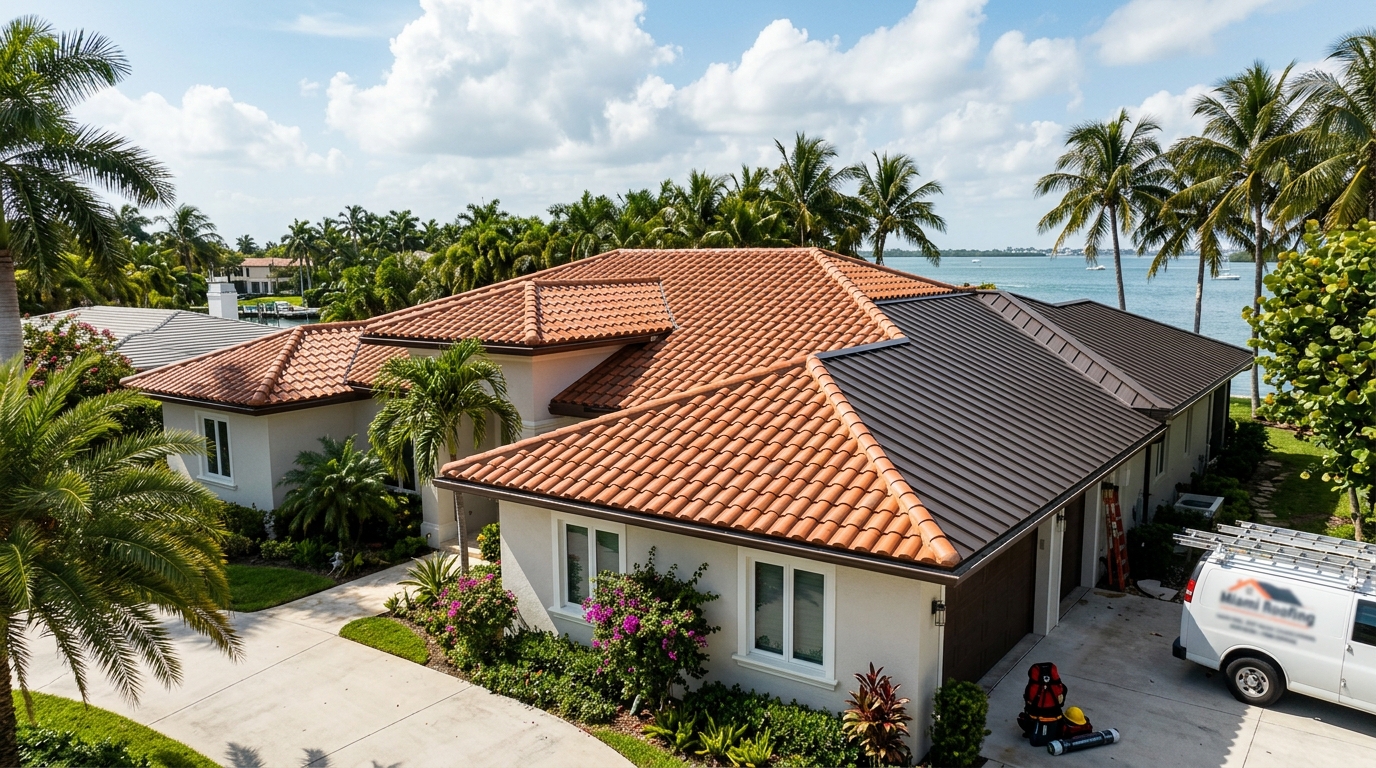
If you own a home or business in South Florida, you already know that roofing isn't just about curb appeal here — it's about survival. Every June through November, our community keeps one eye on the tropics. That's exactly why so many local homeowners are asking us about installing a metal roof in Miami before the next big storm rolls through. A metal roof is one of the strongest, longest-lasting, and most hurricane-ready options you can put over your head in our climate, and in this guide we'll walk you through why.
At Gold Star Roofing, we've spent more than 20 years installing and repairing roofs across Miami-Dade and Broward County. We've seen what holds up after a hurricane and what doesn't. Below is an honest look at metal roofing — the real benefits, a fair comparison to tile and shingle, and straight answers to the concerns we hear most often.
01Why a Metal Roof in Miami Stands Up to Hurricanes
Why a Metal Roof in Miami Stands Up to Hurricanes
The single biggest reason to consider metal roofing here is wind performance. When a metal roof is properly installed with the right fastening and underlayment, many systems are tested and rated to withstand winds of 150 mph or more — well into major-hurricane territory.
That matters because Miami-Dade County enforces the strictest wind and hurricane building codes in the entire United States. Any roof installed here has to meet the High-Velocity Hurricane Zone (HVHZ) requirements, which means rigorous testing for wind uplift and wind-driven debris. Quality metal roofing systems carry the Miami-Dade Notice of Acceptance (NOA) needed to be legally installed in our area, so you're getting a product that was engineered specifically for storms like ours.
A few reasons metal performs so well in high winds:
- Interlocking panels and concealed fasteners resist uplift far better than loose, individual pieces.
- Fewer seams and overlaps mean fewer weak points for wind to pry open.
- Metal won't crack, shatter, or blow off in pieces the way aging shingles often do.
For a coastal city that takes a direct or near-miss tropical system on a regular basis, that resilience is hard to beat.
02Built to Last: Longevity, Energy Savings, and Salt-Air Resistance
Built to Last: Longevity, Energy Savings, and Salt-Air Resistance
A well-installed metal roof can last 40 to 70 years — often two to three times longer than a typical asphalt shingle roof in Florida's punishing sun. For many homeowners, a metal roof is the last roof they'll ever need to buy.
Beyond lifespan, metal roofing brings real day-to-day advantages that matter in the Miami heat:
- Energy efficiency: Metal reflects a large share of the sun's radiant heat instead of absorbing it. With a reflective coating, that can mean a noticeably cooler attic and lower air-conditioning bills during our long, hot summers.
- Salt-air resistance: Living near the coast means constant exposure to salt, which corrodes many materials. Modern coated metal and aluminum panels are made to resist that corrosion far better than untreated materials.
- Fire resistance: Metal is non-combustible, which gives it a strong fire-resistance rating.
- Low maintenance: No more constant patching of cracked or curling shingles after every storm season.
When you spread the cost over decades of service, a metal roof often becomes one of the more sensible long-term investments a Florida property owner can make.
03Metal vs. Tile vs. Shingle: An Honest Comparison
Metal vs. Tile vs. Shingle: An Honest Comparison
Every roofing material has trade-offs, and we'd rather give you the full picture than oversell one product. Here's how the main options compare for our area:
- Asphalt shingle: The lowest upfront cost and quick to install, which is why it's so common. The downside is the shortest lifespan in Florida's heat and sun, plus more vulnerability to wind in older or lower-grade products.
- Concrete and clay tile: Beautiful, heavy, and very durable. Like metal, quality concrete tile can be rated for 150+ mph winds. Tile is excellent, though individual tiles can crack from flying debris and it puts more weight on your structure.
- Metal: The strongest wind performance per pound, the longest typical lifespan, and the best heat reflection — usually at a higher upfront cost than shingle but competitive with premium tile.
There's no single "best" roof for everyone. The right choice depends on your budget, your home's structure, and how long you plan to stay. During a free inspection, we'll tell you honestly which material makes the most sense for your specific property.
04Addressing the Common Concerns About Metal Roofs
Addressing the Common Concerns About Metal Roofs
We get the same handful of questions almost every week, so let's clear them up:
- "Won't it be loud when it rains?" This is largely a myth from the old days of bare metal barns. A modern metal roof installed over solid decking and underlayment is no louder than any other roof during a Miami downpour.
- "Does metal attract lightning?" No. Metal does not attract lightning, and because it's non-combustible, a metal roof is actually a safer material if lightning ever does strike nearby.
- "Isn't it too expensive?" Metal costs more upfront than shingle, but it can last two to three times as long, may lower your cooling bills, and can qualify you for insurance premium discounts thanks to its wind resistance. Over the life of the roof, the math often works in your favor.
05Insurance, Code, and Grant Programs Worth Knowing
Insurance, Code, and Grant Programs Worth Knowing
A few Florida-specific facts can make a big difference in what a new roof actually costs you:
- The 25% rule: Under Florida code, if more than 25% of a roof is damaged or repaired within a 12-month period, the roof generally has to be brought up to current code — which often means a full replacement. If your roof is already aging, investing in a durable metal system can be the smarter long-term move.
- Insurance discounts: Because of their wind ratings, impact-resistant roofs like metal can qualify for homeowners-insurance premium discounts. And when a roof is destroyed by a covered storm, many replacements are paid for largely by your homeowners insurance.
- My Safe Florida Home: This state program offers eligible homeowners grants of up to $10,000 to harden their homes against hurricanes, including roof improvements. It's worth checking your eligibility before you start a project.
We help our customers navigate insurance claims and document storm damage properly, so you're not left figuring out the paperwork alone.
06Frequently Asked Questions
Frequently Asked Questions
How long does a metal roof last in Miami's climate?
With proper installation and coastal-grade coatings, a metal roof typically lasts 40 to 70 years here, even with constant sun and salt-air exposure. That's well beyond what most shingle roofs achieve in Florida.
Is a metal roof approved for Miami-Dade County?
Yes — as long as the specific system carries a Miami-Dade Notice of Acceptance (NOA) and is installed to High-Velocity Hurricane Zone standards. We only install code-approved systems that meet these requirements.
Can a metal roof lower my insurance and energy costs?
Often, yes. Metal's wind resistance can qualify you for insurance premium discounts, and its reflective surface can reduce the heat your home absorbs, helping ease your AC bills during summer.
07Schedule Your Free Roof Inspection
Schedule Your Free Roof Inspection
If you're weighing a metal roof for your Miami home or business, the best next step is a clear, honest assessment of what you have now. Gold Star Roofing is a family-owned, locally owned contractor — fully licensed, bonded, and insured in Florida — serving Miami-Dade and Broward County, including Hialeah, Doral, Coral Gables, Kendall, Homestead, Fort Lauderdale, Boca Raton, and West Palm Beach.
We offer free, no-obligation roof inspections so you can make an informed decision before hurricane season puts your roof to the test. Reach out today to schedule yours, and let's make sure your roof is ready for whatever the tropics send our way.